https://www.youtube.com/watch?v=Y97u-U0nvJM
(The Last of Us Main Theme)
https://www.youtube.com/watch?v=sCxv2daOwjQ
(Halo 2 Main Theme)
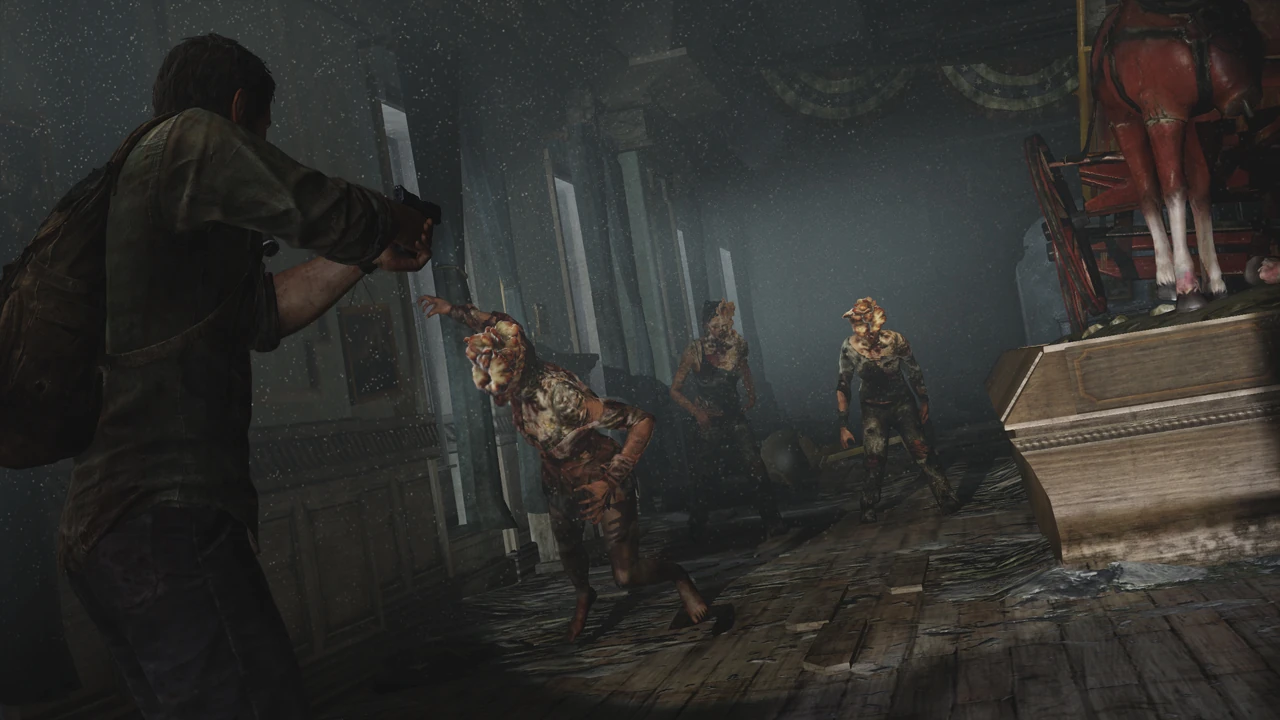
The main theme for the 2013 PlayStation 3 exclusive title The Last of Us, starts out with a single sombre Spanish Guitar playing which immediately creates a sense of sorrow in the listener, it gets progressively louder till 18 seconds in where it reaches its peak. The strings in the background also add a feeling of unease to the piece, generating tension and making the player feel unsafe as well and like there may well be something with malicious intent close by, well suiting the emotionally charged story driven way the game presents itself in it post apocalyptic world.

At the 42 second mark the tempo briefly changes to a slightly faster one, possibly as a way of alluding to the combat aspects of the game as it had already linked to its two other key areas, that being the story and its overall sad atmosphere, and its creepier survival horror aspects. This section is quick and not the main focus of the piece which can be interpreted as a reflection on the largest focuses of the games, with the sad tone of the whole piece showing that the story is the most integral part of the game, the feeling of unease created by certain areas of the music indicating to the more tension filled moments with the games monsters, and the shorter area of action in the game where the player finds themselves directly in combat. When the song reaches the 1 minute 8 seconds mark it slowly becomes quieter and more relaxed until being near silent at 1 minute 16 seconds snapping back to the main melody used in the beginning of the piece. From here the melodies and tunes heard thus far loop twice until at 2 minutes 52 seconds the tempo swiftly rises only to fall near immediately, becoming quieter and quieter till the song ends at 3 minutes 3 seconds.
The overall atmosphere is designed to reflect the themes and feelings the game strides to accomplish with a great emphasis on the sense of loss, sorrow and insecurity conveyed by the games narrative and the structure of the game's main theme. Using heavy emphasis on a single a single acoustic guitar it also carries a highly western feeling which is fitting as it reflects the very violent frontier atmosphere in this post apocalyptic world.

Based on the platform it was created for, the PlayStation 3, the most likely way this was created would be to use the highest possible quality sound files with no real concern for the amount of ram it would take up due to the huge amount of information that can be stored on a Blu Ray disk, meaning little to no compression on the audio files used. It also seems highly likely that it would have been optimised for surround sound due to the capability of the console's technology in an effort to give a greater sense of immersion. Through the use of analogue methods of sound recording greater sound quality was able to be captured before being converted into digital, thereby getting more real and authentic sounds.
With the music being created especially for the project and the composer being commissioned to create licenced music in this way it avoids many possible legal problems that could arise later, avoiding things such as court disputes. The creator will have had to sign an agreement to take up this job too which is a key part of the legal process.
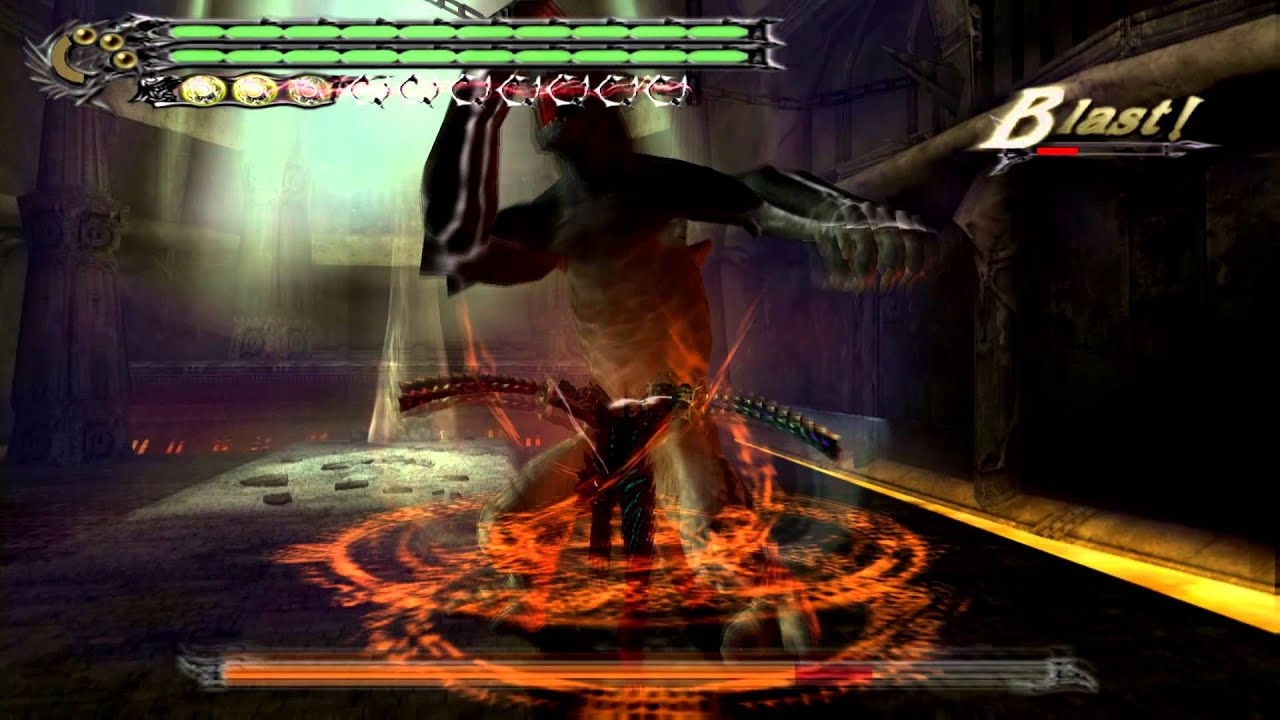
The Halo 2 Main theme takes a far diffrent approach to what type of atmosphere it creates. Starting out with deep ominous humming, it quickly a feeling of alienation and the unknown before beginning some Gregorian style chanting at the 6 seconds mark which begins to fill the player with a sense of wonder and reflects that the world of the game is vast and mysterious creating intrigue within the game world itself, helping give the player a sense that the universe of Halo is far greater and grander than themselves using only a few notes and chords.

But this is atmosphere is quickly changed to reflect the more key structure of the game's focus, that being action and making the player feel as badass as possible by taking the iconic theme from the first game and recreation it using a highly intense electric guitar. At the 23 seconds mark a guitar rif behind which builds and progressively becomes louder and more intense up till the 39 seconds mark, at which point the classic Halo theme with the electric guitar. This creates a sense of excitement within the player and prepares them for the action and combat to come bolstering their resolve and psyching them up for the fighting which lays ahead, which is where the main focus of the game lies. The piece continues like this util reaching it's climax at the 3 minute 29 mark and swiftly ending the main guitar section of the song.


After this it returns briefly to more of the chanting from the start of the song, reminding the player of the sense of how vast the game's universe is and that it is not only action.

Unlike the last of us the story is not one designed to play on the players emotions and instead is used to boost the players sense of being a heroic futuristic space soldier. This is music is also designed to compliment the act of playing rather than the narrative, falling well in line with the general direction of the game with its overall focus being more on the gameplay than its storyline. The music keeps a consitantly fast tempo to keep the players excitement levels consistently high. The music also uses many quick percussion sounds as well, possibly as a way of alluding to the sounds the may experience in one of the game's many combat sequences. The rapid pacing and use of certain instruments makes this a piece of music one in which the player will find memorable, helping the player to associate the game with its fast an intense combat as opposed to its somewhat lacking story and characters which is the opposite of what the main theme of The Last of Us sets out to do.
The console that this theme was created for, the Xbox, was less advanced then that of the PS3 and as such was less capable of storing and using as much data, meaning that it is far more likely that the file types used on the development of the Halo 2 Main Theme would compress the audio, possibly using file types such as MP3s. Its more likely due to the more limited technology of the time that they will have recorded entirely in digital for this piece, meaning far less RAM would have been used to create it. The music is also optimised for Stereo sound and not surround, again most likely due to the console it was made for's more limited hardware and how surround sound had not particularly become popular at the point of its development.
Like The Last of Us, Halo 2's main theme was entirely made for the game, meaning far less trouble such as trying to get licensing rights to use the song in the game, thus eliminating some possible legal problems.
As a whole the piece puts the player near immediately directly into the centre of the action and gets their adrenaline pumping, which is nearly the opposite of everything about The Last of Us. Where the Halo 2's theme endeavors to create a focus on a feeling of glory in combat, excitement and triumph, the main theme for The Last of Us has a far greater focus on the story driven elements of the game, putting emphasis on the on the sadder emotions the game conveys so well, helping to make the music polar opposites of one another. This is evident in the set up with how the high action sounding part of the music taking focus in Halo 2's main theme and next to none in The Last of Us and the opposite being true as well. This contrast in music works highly effectively to emphasise the difference in tone and overall structure of the games as a kind of shorthand for what the game consists of. However different the theme's that each piece convey are they both feature similar methods of production, both use music performed live in a studio and where a console exclusive title and had a large amount of money put forward by third party publishers for their development which lead to the studios being able to use high quality equipment to get the best possible sound quality. The difference on the more technical side of their development mostly falls on the time in which they were developed as they both use similar recording methods and equipment but the advances in technology is makes their creations different as. Both pieces to this extent reflect the times in which they were created both from a technological standpoint with both having similar production values but and being the technological peak of the time, and in the way each piece is structured with Halo being entirely focused on its action elements at a time when online multiplayer was quickly being pushed to the forefront of the games industry, and The Last of Us focusing on the more emotionally charged elements as gamers began to care less about a games online capabilities and wanted greater narrative structure. This progressive development mirrors a stage in cinema's history from roughly a decade earlier where CGI first came to be a truly prominent and films became less about story and characters and more about the spectacle of what could be shown because of this new technology, and it wasn't until nearly a decade later that films returned to focusing on characters with innovative films like the Lord of the Rings trilogy relying on the strength of its characters and narrative and even choosing to rely more on practical effects over CGI.


 The place this wide and varied use of 3D is most evident is within the video games industry, where games like battlefield use 3D to create models and environments designed to closely mimic objects and environments found within the real world, this style became particulary popular among First Person Shooters during the seventh console generation where games became more focused on simulating realistic combat reflecting that of real world's conflicts at the time t, or games like the popular team shooter Overwatch that use a cartoony art style to create a distinct look, for a while this art style mostly saw popularity among the Indie game industry and saw very little success on the mainstream consoles of the generation, but as time passed people became tired of the now over saturated realistic artstyle and these more outlandish and unrealistic art styles have been increasing in popularity since.
 Polygonal 3D models are also now often used in architecture whereby architects will use it to incorporate all the 2D information within a 3D space, with architects using it as a key part of the planning stage when designing structures such as bridges and buildings. it benefits the process by allowing the architect to look for errors that may have occurred during the drawing process, helping to get a better visualisation of the project and also works effectively as a marketing tool. Another area to recently adopt 3D modelling is that of art. it is becoming increasingly popular for artists to create their pieces within 3D modelling software such as Maya. A prominent example of such anj artist is Ray Caeser, who using 3D models creates art that is beautiful and disturbing.
  A key part of 3D modelling is geometric theory. Within geometric theory a basic initial mesh is used for an object that is later improved upon using different textures, with the mesh being built up of different polygons. Polygons are simple 2D shapes that contain three components, the vertice, the edge and the face. The first two are created upon the forming of a single line with the latter requiring roughly three at a minimum making up a basic triangular polygon. the vertice is the point the polygon, the edge is the lines making up each side of the polygon and the face is the large area in the centre of all edges and vertices. Adding more vertices creates more complex shapes such as quads, hexagons and decagons. These polygons are what is added together to create the complex models and environments used in many forms of media, this is known as mesh construction which is the most basic part of creating a 3D model upon which the rest is developed